
For example, the nutrition recommendations for marathoners is a lot different from those for golfers. By mastering one of these practices every couple of weeks—in order—you’ll be a totally different athlete. And not only that, you’ll have turned your entire eating program around without much hassle or stress. You’ll get detailed recommendations for what to eat, how much to eat, and when to eat to optimize performance for your sport.
Track & Field Athlete Kartik Kumar Accepts Sanction for Anti-Doping Rule Violation
These small habits can make a big difference in reaching your fitness goals. Milk-based proteins, like the whey and casein found in yogurt, have a chemical structure that allows them to be broken down and absorbed efficiently—helping your body start the recovery process sooner. In this article, we break down why strained yogurt is an ideal post-workout snack and share additional dietitian-approved tips to optimize post-exercise nutrition. Katey Davidson is a Canadian registered dietitian and certified personal trainer with a Master of Science in Foods and Nutrition.
The importance of micronutrients for athletes
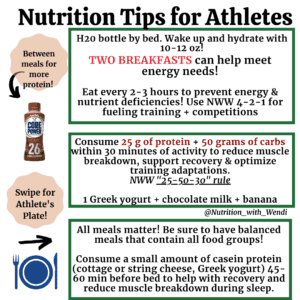
You should try to aim for three spaced-out meals a day with snacks in between each meal. When it comes to exercise, you’ll want to have something small to eat (usually carbs or protein) at least an hour or two before exercising and immediately after a workout. If you love our sports nutrition guides, and are hungry to learn more about coaching athletes (or yourself) to peak performance, check out our Advanced Certificate in Nutrition Coaching for Athletes.
Fats are unique because they provide 9 calories per gram, whereas protein and carbs provide 4 calories per gram. For example, if you consume 2,500 calories per day, this would equate to 280–405 g daily. Because thirst is not a reliable way to tell if you need water, be sure to drink even if you are not thirsty. You will not start feeling thirsty until you have already lost about 2% of your body weight—enough to hurt performance. Also, if you stop drinking water as soon as your thirst is satisfied, you will get only about half the amount you really need. Sports nutrition can require a lot of fine-tuning, especially when you’re just getting started.
What are the “right foods” for athletes?
When you exercise strenuously, you lose a significant amount of fluid. It’s important to replace that fluid (rehydrate) so your body can continue to function at its best. In addition to the epic vegan whole foods we’ve already mentioned, these body-boosting ingredients will push you ahead of the pack. All that’s to say, one or two drinks won’t completely derail your progress, but you’re probably better off saving your bar days for the off-season.
We have the right vegan supplements for you, so you don’t have to worry about meeting your nutritional needs. The right nutrients not only help you reach your full potential, but also recover faster and stay healthy in the long term. Here you can find out how to unimeal reviews consumer reports tailor your diet to your training – explained simply and based on scientific evidence. While it’s easy to identify what type of fuel is best during training and competition, keep reading to learn how to optimize that intake based on the type of exercise. “An athlete should have this balance between sodium and water to prevent muscle cramps, or even more of a concern, a condition called hyponatremia,” she says. “Some products still contain small amounts of trans fat, so eating large amounts of these foods can add up,” explains Mckenzie Dryden, RD, a registered dietitian with HonorHealth.
Allen tells athletes at Missouri State to keep a few packets like that in their gym bags because it works quickly to resolve cramps and weakness. Ideally, you’ll want to replace other electrolytes as well, such as potassium, magnesium, and calcium, and sports drinks can help to round out what you need, she adds. When we think about our sports nutrition…what’s going to make it “golden? In my opinion every athlete who is serious about performance should aim to have top notch sports nutrition habits. Our bodies have become these machines – dealing with everyday stress, stress of long and hard workouts, and stress under sleep deprivation.
Increase Your Fibre Intake
Our sports dietitians work with athletes of all levels to develop nutrition plans tailored to their individual needs. The first thing the body wants to do when it’s done with activity is replace its glycogen stores or its energy stores. A portion of carbohydrate-rich foods—fruit, potatoes, grains, beans—is the size of your cupped hand and provides about 25 grams of carbs. Because athletes burn more calories than the average person, they also require more calories. The importance of adequate energy intake reaches far beyond athletic performance.
- Our comprehensive reviews of the best sports betting sites help you find licensed US sportsbooks, while our guides cover fundamentals and sport-specific approaches.
- For example, the nutrition recommendations for marathoners is a lot different from those for golfers.
- Zinc-rich foods such as meats, shellfish, legumes and seeds can help prevent such deficiencies.
- Born and raised in Colorado, Craig grew up surrounded by the mountains, a small town atmosphere, farming, skiing and aviation.
- But it’s not just the amount of protein that makes yogurt a smart post-workout choice—it’s the quality, too.
- Ideally, carbs should take up two-thirds of your plate at all meals.
Gut Healing & Elimination Diets
Our assessments predominantly indicated unclear risk of bias for 55 studies (77%), while 12 studies fell into the category of high risk (17%) and 4 studies (5%) exhibited a low risk of bias (see Supplementary Material S8). This was primarily due to a lack of reporting of protocols prior to the trials. Without this issue, the majority of interventions would have scored a low risk of bias. Generally, the studies scored better (were assessed as having “low risk”) on items related to deviations from the intended interventions, missing outcome data, and participant randomization.
How does nutrition affect sports performance?
Another common myth in sports nutrition is that eating close to bedtime will cause additional fat gain. One of the roles of sports nutritionists is to help debunk these myths and provide athletes with accurate information. Here are three of the top sports nutrition myths — and what the facts really say.
Proteins
But, armed with the right knowledge, you’ll keep RED-S at bay—and that’s exactly what we will help you with during this guide to sports nutrition. Whether you’re a part-time runner, a full-time HIIT enthusiast, a muscle-pumping bodybuilder or a hardcore hiker—getting the right fuel into your body is essential. A lack of proper electrolytes can lead to increased heart rates and physical discomfort, and in extreme cases, can lead to heart attacks and even death. The range for how much of each micronutrient you need varies greatly from one to the next, and just like macronutrients, certain athletes may need more or less depending on what their specialty is.
tips to eat like an Olympic athlete
Not only do they require more calories to compete at their optimum level, but they also require greater amounts of macronutrients to maintain strength, endurance, and peak recovery (Streit, 2021). For this systematic review, the modified Cochrane risk-of-bias for randomized trials tool (RoB 2) was used.18 This scale, which is included in the Covidence tool, was employed to assess the potential risk of bias in each study. Based on the major domains of bias, the https://www.betterhealth.vic.gov.au/health/healthyliving/sporting-performance-and-food risks of bias were categorized as “low risk,” “unclear risk,” or “high risk.” Two authors (J.J.R.-A. and R.I.) conducted independent assessments of the quality of the studies and evaluated the risk of bias.
Which nutrients improve athletic performance?
Electrolytes are simply minerals with a small electrical charge, which help the body regulate your heartbeat, muscle contractions, fluid regulation, and more. They also help maintain the balance of fluids in and out of your cells — you don’t want to have too little or too much fluid in them. Just like caloric requirements, your macronutrient split is going to vary depending on what type of gold medal or trophy you’re vying for. Again, this is a conversation you should have with qualified professionals who will measure your body weight, examine your metabolism, and determine what split will work best for your personal needs. During his prime, Olympic swimmer Michael Phelps consumed nearly 12,000 calories per day.